


live online roulette casino in 2026: a practical guide
live online roulette casino has a rich history dating back to 18th-century France. Today, it is a centerpiece of casinos worldwide. The strategic use of live roulette online casino games can turn a effortless game into a calculated pursuance.
See also:
- Is live roulette online casino games Right for You? Let’s Find Out
- Top Roulette Bonus Offers
- Mastering the Game: live online roulette casino tips
- Roulette Wheel and Table Layout
- Common questions about live online roulette casino tips answered.
- Why Bankroll Management Matters in Roulette
Is live roulette online casino games Right for You? Let’s Find Out
live online roulette casino remains one of the most iconic games in any casino, and in 2026, its appeal shows no sign of waning. The spinning wheel and bouncing ball continue to captivate players, whether they are drawn to the elegance of European roulette or the extra thrill of the American double-zero layout. Understanding the odds and betting options is key to enjoying the game responsibly, and our guide covers the essential strategies for both newcomers and seasoned players. When exploring the various ways to wager, online casino live roulette game often emerges as a popular prize due to its balanced payout and coverage. The game’s story dates back to 18th-century France, where mathematician Blaise Pascal’s attempts at a perpetual motion machine inadvertently led to the roulette wheel. Today, the European version features 37 pockets numbered 0 to 36, with a single zero giving the put up a 2.7% edge, while the American version adds a double nought, increasing the house edge to 5.26%. Players can choose from inside bets on specific numbers or small groups, offering higher payouts but lour probabilities, or remote bets covering larger sections like red/black or odd/even, which pay 1:1. The famous Martingale system, where players double their bet after each loss, can lead to quick recoveries but also risks hitting table limits or depleting a money. More conservative approaches like the Fibonacci episode or the D’Alembert system provide slower progression. Live dealer roulette has surged in popularity, with cameras streaming cash wheels from studios or land-based casinos, allowing players to interact with croupiers and watch the ball din land in real time. Mobile roulette apps now account for over 60% of online play, with features like autoplay, statistics tracking, and customizable bet layouts. Some casinos offer "en prison" rules on even-money bets, where a nought results in the place a bet being locked for the next spin rather than lost, reducing the house edge to 1.35% on European wheels. The game’s social aspect remains strong, with multiplayer tables and schmooze functions creating a community feel. Progressive jackpot roulette, where a small side bet contributes to a growing prize, has also emerged, with some jackpots reaching millions. For those seeking the most favorable odds, single-zero roulette with the "la partage" rule, which returns half the gamble on zero, offers the lowest house edge at 1.35%. Understanding variance is crucial: even-money bets have low variance, winning nearly half the time, while straight-up bets on a single figure win only 2.7% of the time but pay 35:1. The game’s randomness is ensured by strict regulations and regular testing of RNGs, with independent auditors like eCOGRA certifying fairness. In land-based casinos, wheels are balanced and inspected day-by-day to foreclose preconception. The sound of the ball clicking against the metal frets and the dealer’s announcement "No more bets" create an atmosphere of anticipation. Whether playing for fun or gain, setting loss limits and time limits is recommended, as the game’s hypnotic rhythm can lead to extended sessions. The rise of cryptocurrency casinos has introduced roulette games with provably fair algorithms, where players can verify each spin’s outcome. Virtual reality roulette is also emerging, with immersive 3D environments where players can take the air around the table and put chips physically. The game’s cultural impact is evident in films like "Casablanca" and "The Deer Hunter," where roulette scenes symbolize fate and chance. In 2026, the worldwide roulette market is expected to grow by 8% annually, driven by online platforms and live dealer innovations. For beginners, starting with out of doors bets and gradually exploring inside bets is advisable, while advanced players might use sector betting, focusing on specific wheel sections. The James Bond strategy, covering 25 of 37 numbers with a combination of bets, offers a high probability of winning small amounts. Ultimately, roulette remains a game of pure chance, and no strategy can overcome the put up edge in the long run. However, its blend of simplicity, excitement, and potential for big wins ensures its place as a casino staple fibre. The social dynamics at the table, with players cheering for their numbers and sharing wins, add to the experience. Many casinos now offer electronic roulette terminals, where multiple players can bet on the same spin without a physical wheel, though purists argue they lack the tactile thrill. The game’s evolution continues with augmented reality features that overlay statistics and betting history onto the physical table. As technology advances, the core appeal of the spinning roll and the hope of a lucky number remain unchanged.
Top Roulette Bonus Offers
- 150% up to $250
- $1500 + 100 free spins
- 200% match bonus
- 50x playthrough required
- 40x playthrough in 30 days
- 45x wagering within 14 days
Mastering the Game: live online roulette casino tips
{"expanded": "### Understanding the House Edge and RTP in Roulette\n\nBefore diving into specific strategies, it’s essential to grasp the core concepts that govern roulette outcomes: the house edge and the Return to Player (RTP). These two metrics define the long-term advantage the casino holds and the theoretical payback to players. In European roulette, which features a single zero, the domiciliate edge is 2.7%, meaning the RTP sits at 97.3%. This is the most favourable edition for players among standard roulette variants. American roulette, with its additional double zero point, increases the house edge to 5.26%, reducing the RTP to 94.74%. French roulette, when applying the ‘La Partage’ or ‘En Prison’ rule on even-money bets, can lower the put up edge to as little as 1.35%, making it the premier option for those looking to minimise the casino’s advantage. Live roulette games, whether streamed from a studio or a land-based venue, typically follow the European or French rules, so the same RTP figures apply. Understanding these numbers is crucial because no betting system can get over the inherent house inch over time. Every spin is independent, and while short-term variance can produce wins, the mathematical expectation remains negatively charged for the user. Therefore, the first tread in any roulette strategy is choosing the variant with the lowest house edge—ideally French roulette with La Partage or European roulette—and avoiding American roulette unless it offers unique betting opportunities. By doing so, you are already maximising your theoretical bring back before placing a single microprocessor chip. For instance, over 1,000 spins, the expected loss on a £10 bet per spin in European roulette is £270, while in American roulette it is £526, a significant difference that underscores the importance of variant selection. Additionally, some online casinos offer special rules like ‘Surrender’ on even-money bets in American roulette, which can cut the house edge to 2.63% for those bets, but this is stock-still worse than European or Daniel chester french roulette. E’er verify the specific rules of the table before playing, as minor variations can impact the domiciliate edge by a fraction of a percent. The RTP is calculated over an infinite number of spins, so in the short term, you may experience results far from the average. This is why funds management and a clear apprehension of variance are vital. By choosing the top variant, you give yourself the highest possible theoretical return, but you must still take on that the casino has a mathematical edge that cannot be overcome by skill or strategy.\n\n### Betting Systems and Their Limitations\n\nMany players turn to popular betting systems the likes of the Martingale, Fibonacci, or D’Alembert in an attempt to complex body part their gameplay. The Martingale, for instance, involves doubling your bet after each loss on even-money bets, with the aim of recovering all previous losses plus a small benefit when a win eventually occurs. While this can appear effective in the unawares term, it carries significant risks: table limits cap how many consecutive losses you can cover, and a long losing streak can deplete your bankroll rapidly. For example, if you start with a £5 wager and lose 10 times in a row, your 11th bet would be £5,120, exceeding most table limits and requiring a total bankroll of over £10,000. The probability of losing 10 consecutive even-money bets in European roulette is (19/37)^10 ≈ 0.0013, or about 1 in 769, substance it will happen eventually if you play long enough. The Fibonacci system uses a successiveness where to each one bet is the sum of the two preceding ones, offering a slower progression but still vulnerable to extended runs of losses. Starting with £1, a losing streak of 10 bets would call for a place a bet of £89 on the 11th spin, with total losses of £231. While less aggressive than Martingale, the Fibonacci still risks significant bankroll depletion. The D’Alembert is more conservative, increasing the bet by one unit after a loss and decreasing by one after a win, which can be less volatile but still does not alter the house edge. In D’Alembert, a losing streak of 10 bets with a unit size of £5 would result in a total loss of £275, with the next bet at £15. This system is often considered safer because the bet size grows linearly rather than exponentially, but it noneffervescent cannot guarantee profits. It is critical to understand that no betting system changes the underlying probabilities of the game. Each spin remains independent, and the expected value of every bet is electronegative. These systems can offer structure and discipline, but they cannot ensure profits. The premier approach is to view them as a way to manage your bankroll rather than a method to beat out the casino. Setting win and loss limits, sticking to a predetermined wager size, and accepting the inherent variance are far more effective than relying on any progression-based strategy. For instance, a player using flat betting—wagering the same amount each spin—will experience less volatility and a slower depletion of bankroll compared to a Martingale user, still though both have the same expected red ink per spin. Ultimately, the most important factor in is the player’s mindset: do by betting systems as a tool for entertainment and discipline, not as a path to consistent profit.\n\n### Advanced Strategy: Inside Bets vs. Outside Bets\n\nA florida key strategic decision in roulette is whether to go around about inner bets, which offer higher payouts but lower probability, or outside bets, which provide near 50/50 odds (discounting the nought) with smaller returns. Outside bets—such as ruddy/black, odd/regular, or high/low—cover nearly half the numbers and pay 1:1. In European roulette, the chance of winning an even-money bet is 48.65%, making these the most reliable options for preserving bankroll. Inside bets, including straight-up numbers (35:1), splits (17:1), and corners (8:1), have much lower probabilities—for instance, a single keep down has a 2.70% chance in European roulette. While the payouts are tempting, the variance is extreme, and you can easily go long stretches without a hit. A balanced strategy often involves combining both types: using outside bets to maintain a steady bankroll and occasionally placing small inside bets for a chance at larger wins. Some players employ the ‘covered’ approach, placing chips on multiple inside bets to cover a larger section of the wheel around while still aiming for higher payouts. However, covering many numbers with inside bets quickly increases the total wager and does not reduce the house edge. For example, covering 12 numbers with straight-up bets costs 12 units and pays 35:1 if one hits, but the probability of winning is 12/37 ≈ 32.4%, with an average out cashout of 35/12 ≈ 2.92 units per unit stake, which is actually worse than the even-money bet’s 1:1 winnings at 48.65% probability. The most mathematically sound strategy is to stick with outside bets with the finest odds, especially on French roulette tables where the La Partage linguistic rule applies. This way, you minimise the impact of the zero and keep the house edge as reduced as possible.
For secure gaming, select a land site that emphasizes live online roulette casino.
Roulette Wheel and Table Layout
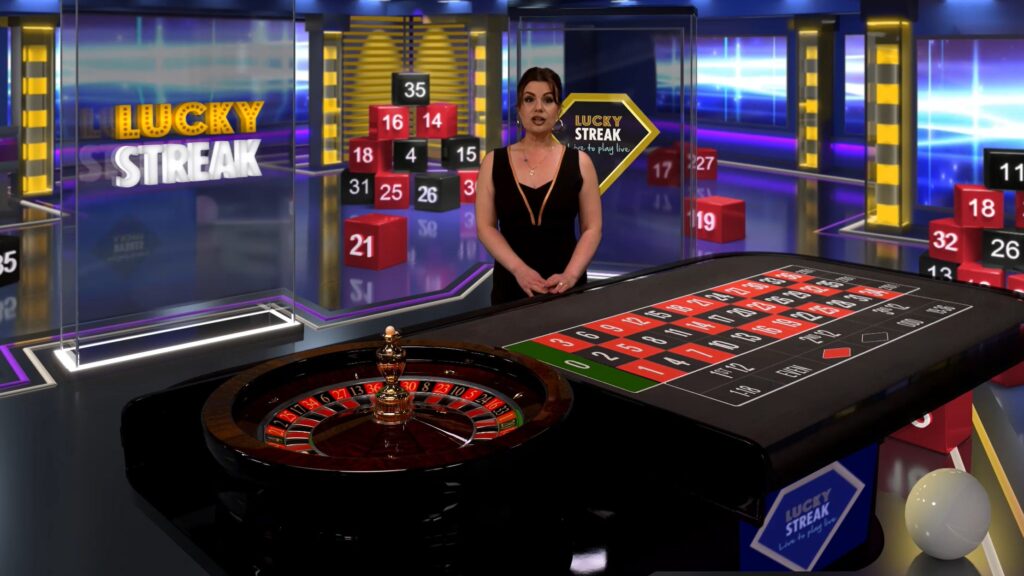
Common questions about live online roulette casino tips answered.
What is the difference between European, American, and French roulette?
European roulette has a single zero (37 pockets) giving a house edge of 2.7%, while American roulette has an extra double zero (38 pockets) increasing the house edge to 5.26%. French people roulette is similar to European but includes the ‘La Partage’ rule, which returns half your even-money bet if the ball lands on zero, reducing the put up border to 1.35%.
What does RTP mean value in roulette and how is it calculated?
RTP (Return to Player) is the theoretical percentage of wagered money a game returns to players over time; for European roulette, it is 97.3% (100% minus the 2.7% house edge). The RTP is the inverse of the house border, so a lower house edge means a higher RTP.
What are the leading betting options for beginners in roulette?
Beginners should start with even-money outside bets like Red/Black, Odd/Even, or High/Reduced, as these offer nearly 50% win chances (48.6% on European roulette). These bets provide thomas more frequent, smaller wins, making them ideal for learning the game’s step and managing your money.
How does live roulette differ from standard online roulette?
Live roulette streams a real dealer and physical wheel in real time, offering an immersive casino experience from home. It combines the social interaction of land-based casinos with the convenience of online play, though bet limits and game hurrying may vary.
What is the house edge for each roulette variant?
European roulette has a 2.7% house edge, American roulette 5.26%, and French roulette with La Partage drops to 1.35%. The house edge represents the casino’s average profit from each bet, so choosing European or French roulette maximises your long-term odds.
Our comparing of live online roulette casino highlights the best sign-up deals.
Why Bankroll Management Matters in Roulette
Gambling is strictly for adults aged 18 and over. In the UK, all licensed operators are regulated by the Gambling Commission (UKGC). If you need to take a prison-breaking, you can self-exclude via GAMSTOP, a free national scheme. For support, touch GamCare or the National Gambling Helpline on 0808 8020 133. Always set deposit and time limits before you play, and do by gambling as entertainment — never try to chase losses. If you’re concerned about your gambling, seek help immediately.